


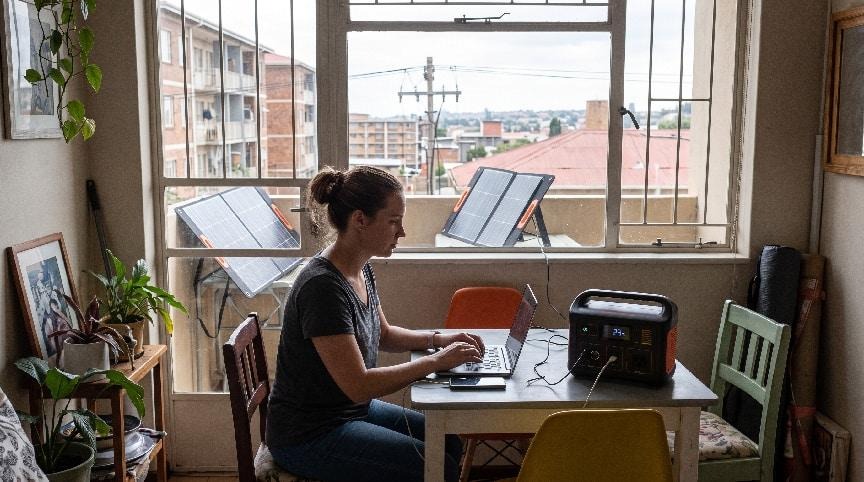
Image: Courtesy of Connect World TV
In Johannesburg’s booming rental market from high-density apartment blocks in Hillbrow, Berea, and Braamfontein to modern sectional-title complexes in Rosebank, Randburg, and Sandton a major structural divide has emerged.
While property owners across Gauteng continue to install rooftop solar panels and fixed hybrid inverters to break free from grid instability, residential tenants are legally trapped in the dark. Between strict lease clauses, Sectional Titles Act restrictions, and municipal infrastructure failure, renters face 8 to 12 hours of weekly power cuts without the legal right to modify their homes.
The Legal Trap: Why Renters Can’t Install Traditional Backup Power
For the millions of people renting apartments and townhouses in Johannesburg, solving power outages isn’t a financial question it is a legal hurdle.
The “No Alterations” Lease Clause: Standard South African residential leases strictly forbid tenants from making structural or electrical modifications. Mounting solar panels on a roof, drilling into exterior brickwork, or wiring an inverter directly into the main distribution board (DB board) violates lease terms and forfeits security deposits.
Body Corporate & Conduct Rules: Under the Sectional Titles Schemes Management Act, common property (including roofs, outer walls, and stairwells) belongs to the body corporate. Installing solar requires special resolutions and owner approval that tenants cannot request directly.
Generator Prohibitions: Noisy, petrol-powered generators violate municipal noise bylaws and building safety codes. Body corporates across Johannesburg actively issue fines exceeding R1,500 for generator operation on balconies or inside high-density residential blocks.
The Grid Crisis Facing High-Density Renters
While national load shedding schedules experience temporary lulls,localized power disruptions hit high-density rental nodes disproportionately hard.
| Outage Source | Primary Cause | Typical Impact on Apartment Buildings |
|---|---|---|
| City Power Equipment Failure | Substation explosions, burnt feeder boards, aging transformers | 24 to 72 hours of continuous blackout per incident |
| Infrastructure Vandalism | Underground copper cable theft & syndicate sabotage | Multi-day power loss affecting entire suburban blocks |
| Eskom Load Reduction | Grid protection protocols on high-density urban feeders | 4 to 6-hour daily scheduled cuts during peak hours |
According to Eskom’s Medium-Term System Adequacy Outlook (2026–2030), structural generation capacity challenges remain a long-term reality as aging coal stations reach retirement. Furthermore, Eskom’s targeted load reduction programs continue to affect over 350 high-priority feeder lines across Gauteng, making high-density residential nodes the primary target for ongoing power interventions.
The Personal & Financial Cost of “Dark Building Syndrome”
When a rental block loses power, the impact goes far beyond switched-off lights:
Security Deficits: Electric perimeter fences, motorized access gates, magnetic doors, and building CCTV systems shut down, dramatically increasing security risks in stairwells and parking garages.
Work-From-Home Losses: With over 40% of Gauteng’s professional workforce operating remotely or in hybrid arrangements, losing Wi-Fi and laptop power directly halts income generation.
Food & Medical Spoilage: Extended municipal outages lasting longer than 4 to 6 hours routinely ruin refrigerated produce, baby milk, and temperature-sensitive medications like insulin.