


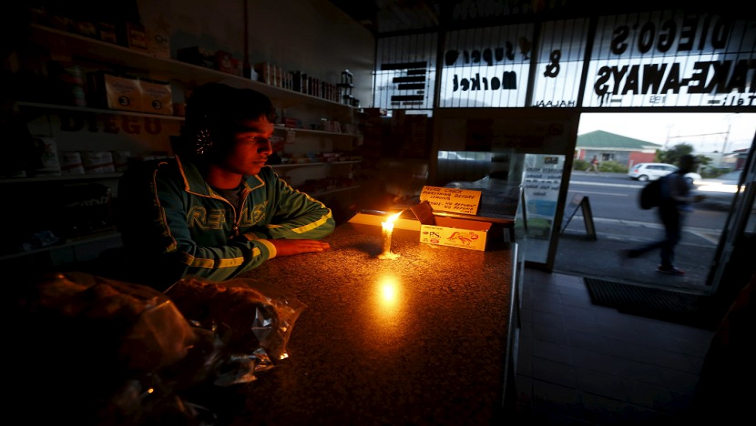
Image: Courtesy of SABC
If you live in Johannesburg, you have lived with load shedding and power outages since 2007 that is 17 years of energy instability. Even though national load shedding has seen extended pauses, the truth experienced on the ground is simple: load shedding is paused, not gone forever, and local grid collapse has taken its place.
Why South Africa Still Faces Load Shedding & Power Outages
Aging Power Stations: Eskom built most coal power stations in the 1970s and 1980s with an intended 40-year operational life span. Now over 50 years old, they break down regularly. Newer stations like Medupi and Kusile are the examples of those who suffered years of construction delays and structural faults.
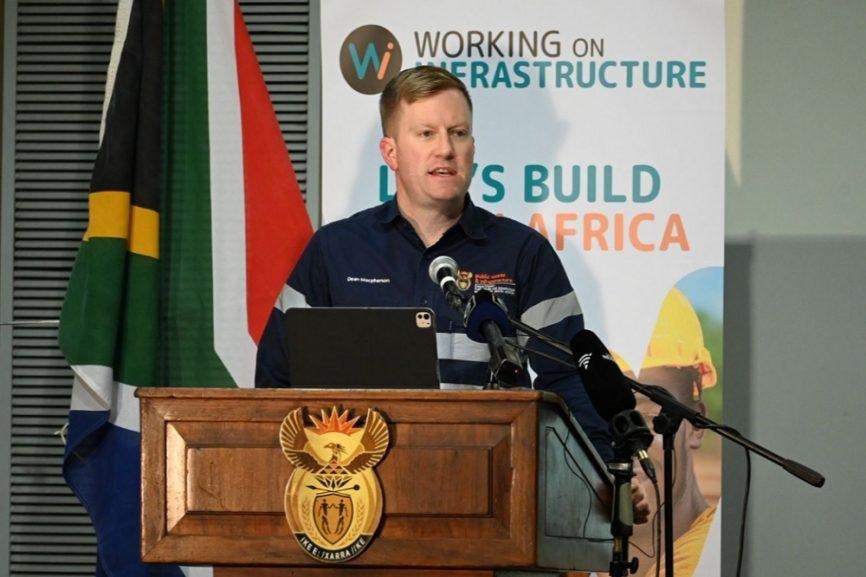
National Minister of Public Works and Infrastructure, Minister Dean Macpherson
Historical Maintenance Backlog: Between 2000 and 2015, critical maintenance was repeatedly deferred to save costs, creating a massive backlog of breakdowns that plague the grid today as acknowledged a year ago by National Minister of Public Works and Infrastructure, Minister Dean Macpherson , this backlock seats at approximately R30 billion and spreading across 56 000 properties.
Rapid Population Growth vs. Fixed Infrastructure: In particular Gauteng’s population expanded rapidly taking over kwazulu-natal. According to StatsSA “Gauteng became the most populated province in the country in 2011, after it overtook Kwakiutl-Natal, with a population of over 15 million in 2022.” Supply capacity has failed to match this growth when peak demand reaches 32,000 MW, supply deficits immediately trigger emergency cuts.
State Capture, Coal Quality & Diesel Expenses: Over R1.5 billion was lost to state capture scandals, coal quality degraded, and relying on expensive diesel open-cycle gas turbines (OCGTs) remains financially unsustainable for long-term power generation.
The 17-Year Timeline
2007–2014: Occasional Stage 1 and Stage 2 rotational cuts start across the country.
2015–2022: Stage 2 to Stage 4 become a routine part of daily life in Johannesburg.
2023 (The Worst Year on Record): Over 280 days of load shedding 6,800 total hours, with Stage 6 implemented for over 80 days.
2024–2026: National load shedding sees extended pauses, but City Power localized outages take over. Cable theft, vandalized sub-stations, feederboard explosions, and local “load reduction” leave typical Johannesburg households without power for 8 to 12 hours weekly.
What the Authorities Say
Official Eskom Warnings
Eskom’s official Medium-Term System Adequacy Outlook (2026–2030) warns that energy shortfalls are projected to re-emerge around 2029–2030. As 8.4 GW of aging coal capacity reaches end-of-life alongside expiring import contracts, the grid faces a 9.5 GW base-load capacity cliff. Eskom Categorically noted that “no power system anywhere in the world can guarantee that load-shedding will never be required again.“
Furthermore, Eskom continues to implement targeted “load reduction” across hundreds of thousands of customer connections in Gauteng and KZN to protect overloaded transformers, aiming for full resolution by March 2027.
Crime and Safety Research
South African Police Service (SAPS) Data: Home break-ins and property crimes increase during blackouts, with risks rising by up to 8% during prolonged outages.
Insurance Sector Analysis (Auto & General): Reported a 40% surge in residential burglary claims during high-stage blackout periods.
Academic Findings: Power disruptions deactivate key guardianship mechanisms such as street lighting, electronic fences, perimeter beams, and CCTV cameras creating opportunistic windows for criminal syndicates.
Economic Cost to Homes and SMMEs
Western Cape Government: Estimated real GDP losses between R48.6 billion and R61.2 billion since 2007 due to power cuts, with small, medium, and micro enterprises (SMMEs) absorbing the heaviest damage.
South African Reserve Bank (SARB): Estimates every hour of Stage 6 load shedding costs the national economy ~R899 million—exceeding R3.6 billion during a full 24-hour cycle.
The Marshalltown Reality: 50 Homes and Businesses Surveyed
In Marshalltown, local municipal network failures have created crisis conditions. Following repeated underground tunnel fires, feeder board explosions, cable theft, and suspected criminal syndicate sabotage at the local Central Substation, residents and business owners faced weeks of sustained blackouts. Even after reported repairs, flash overs and re-ignition killed power within 72 hours.
We surveyed 50, 25 households and 25 small businesses on the financial toll of running without backup power:
Households
Lindiwe (Bree Street, mother of 2): Lost R800 worth of meat and dairy during a 6-hour outage; children couldn’t study for Grade 10 exams; no hot water for infant care.
Joseph (Work-from-Home Call Centre Agent): Lost R1,500 in shift pay when his laptop and Wi-Fi router shut down during an active client call.
Granny Mavis (68, Jeppe Street): Unable to power her CPAP breathing machine or cook basic meals, forcing reliance on neighbors.
Small Businesses
Thandi (Marshalltown Hair Salon): Lost R1,800 in daily income when 4 walk-in clients left due to non-functional clippers and hair dryers.
Abdul (Corner Spaza Shop): Lost R3,500 in spoiled meat and amasi; local customers drifted to major retail chains running industrial generators.
Average Direct Loss: R1,250 per blackout block for small businesses, and R500–R2,000 per day in spoiled groceries and lost productivity for households.
Why Every Household and Business Needs Backup Power Today
National Grid Unpredictability: Eskom warns structural shortfalls remain a threat through 2029–2030.
Local Infrastructure Decay: Substation fires, cable theft, and municipal maintenance faults strike instantly with zero advance warning.
Security Assurance: Keeps alarms, electric fences, Wi-Fi routers, and CCTV systems running during dark hours.
Income Protection: Over 40% of Gauteng workers rely on home connectivity—zero power equals zero income.
Cost Effectiveness: A basic portable power unit pays for itself within 2 to 3 major power outages by preventing spoiled food and lost work time. We tested three portable power station units available in Gauteng for same-day delivery from outlets such as Takealot: Gizzu 242Wh Portable Power Station Specs: 200W Pure Sine Wave, Li-ion Battery, 3.2 kg.
What we found:
Home Setup: Home Wi-Fi (15W) + 2x LED lights (20W) + Small TV (60W) 4 hours 32 minutes. Salon Setup: Hair clippers and ring lights 5 hours making it the preferred solution for Apartments, student rooms, spaza shops, and hair salons. The EcoFlow River 2 (256Wh) is another favourite for many.its Specs are 300W Output (600W X-Boost), LFP (LiFePO4) battery rated for 3,000 and cycles 10-year lifespan, 0-80% fast-charge in 60 minutes.It gives the user 5 hours and 10 minutes great for the Work-From-Home South African using Laptop, External monitor and Wi-Fi Router especially in the era of more home offices, remote work, call center agents and students. Seventeen years of national load shedding and local power outages have transformed personal backup systems from a luxury into a basic necessity, as vital as running water.